
From “It does not work!” to the next step: making a Fukuzawa Yukichi comic
Armoa / MONOPHASES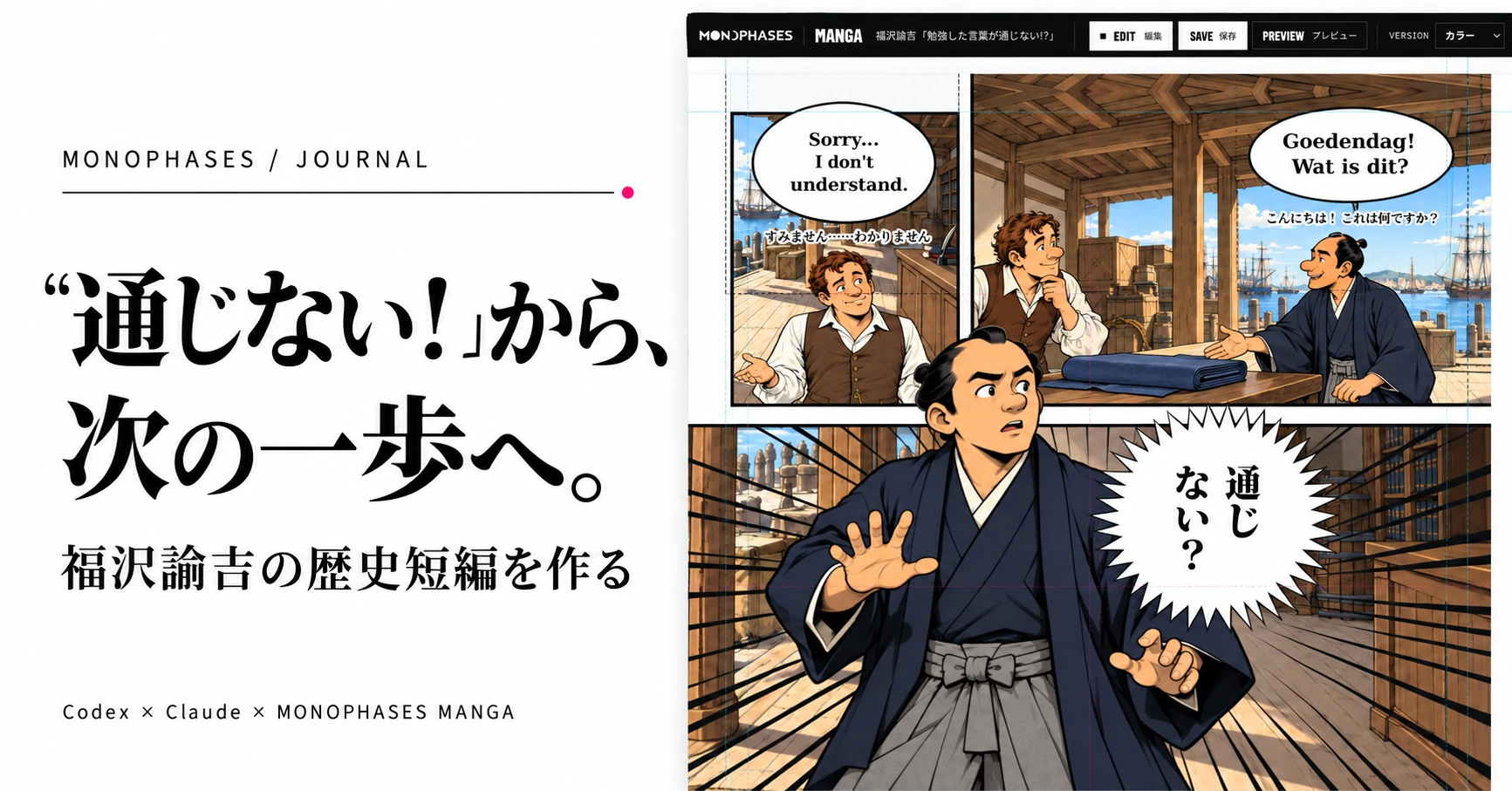
What happens when a language you have studied for years fails you? The second historical short is Fukuzawa Yukichi: “The language I studied does not work!?” — a four-page comic for readers including elementary school children.
Here is the finished comic: four full-color pages, read from right to left.
Read Fukuzawa Yukichi (Japanese) ↗
Fukuzawa Yukichi · Historical short
All four pages below are in Japanese. Open the reader above for a two-page spread on larger screens.
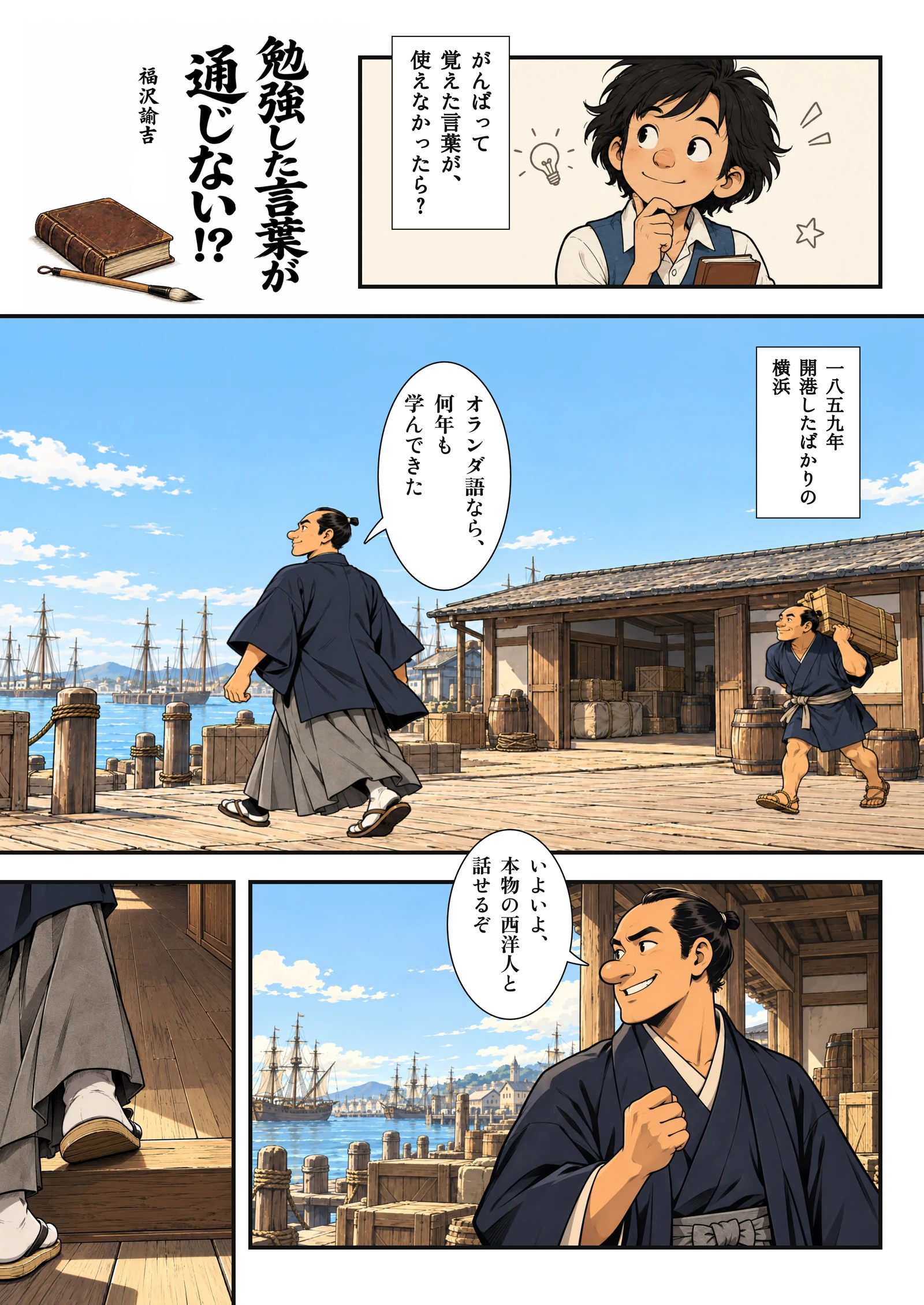
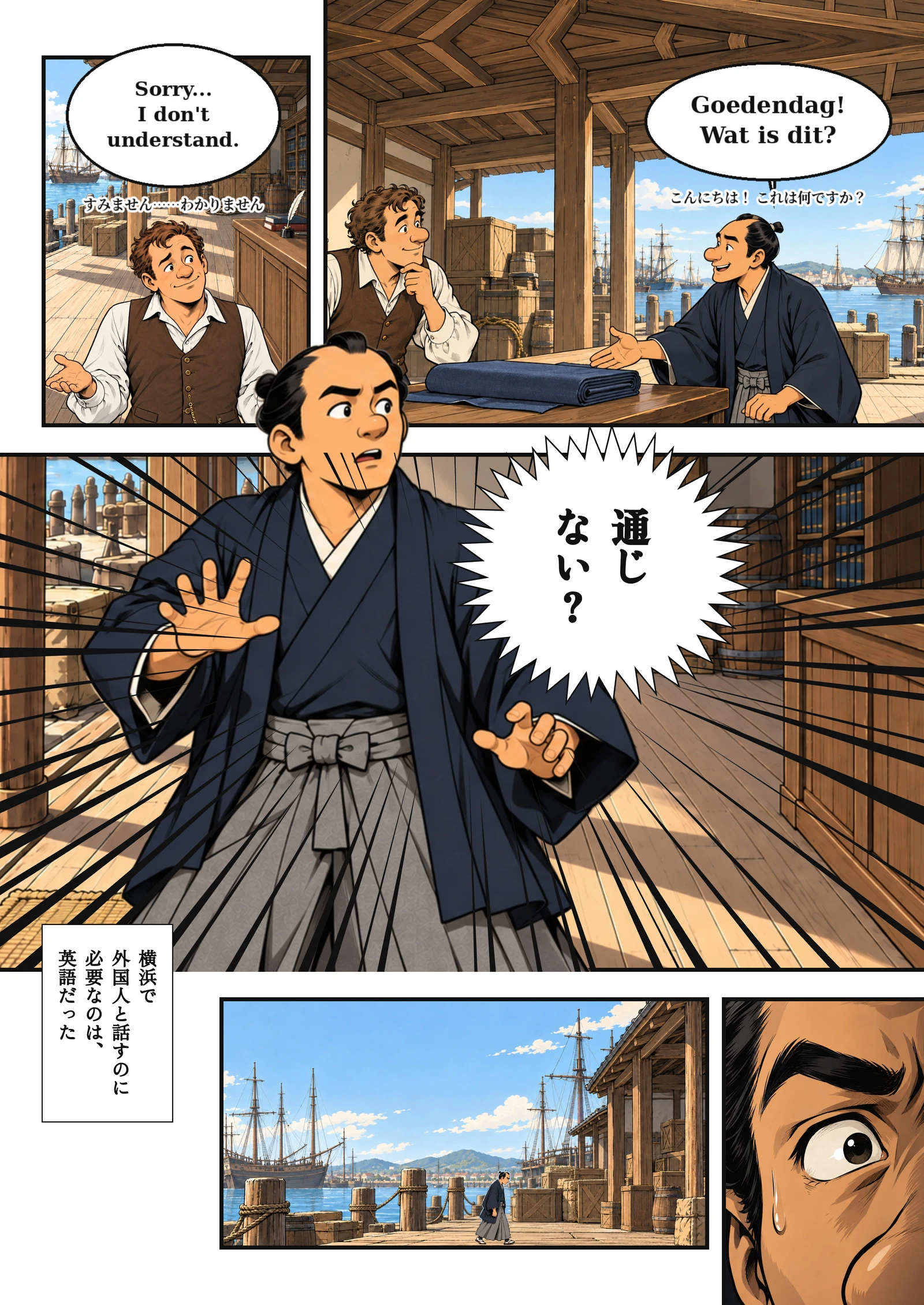
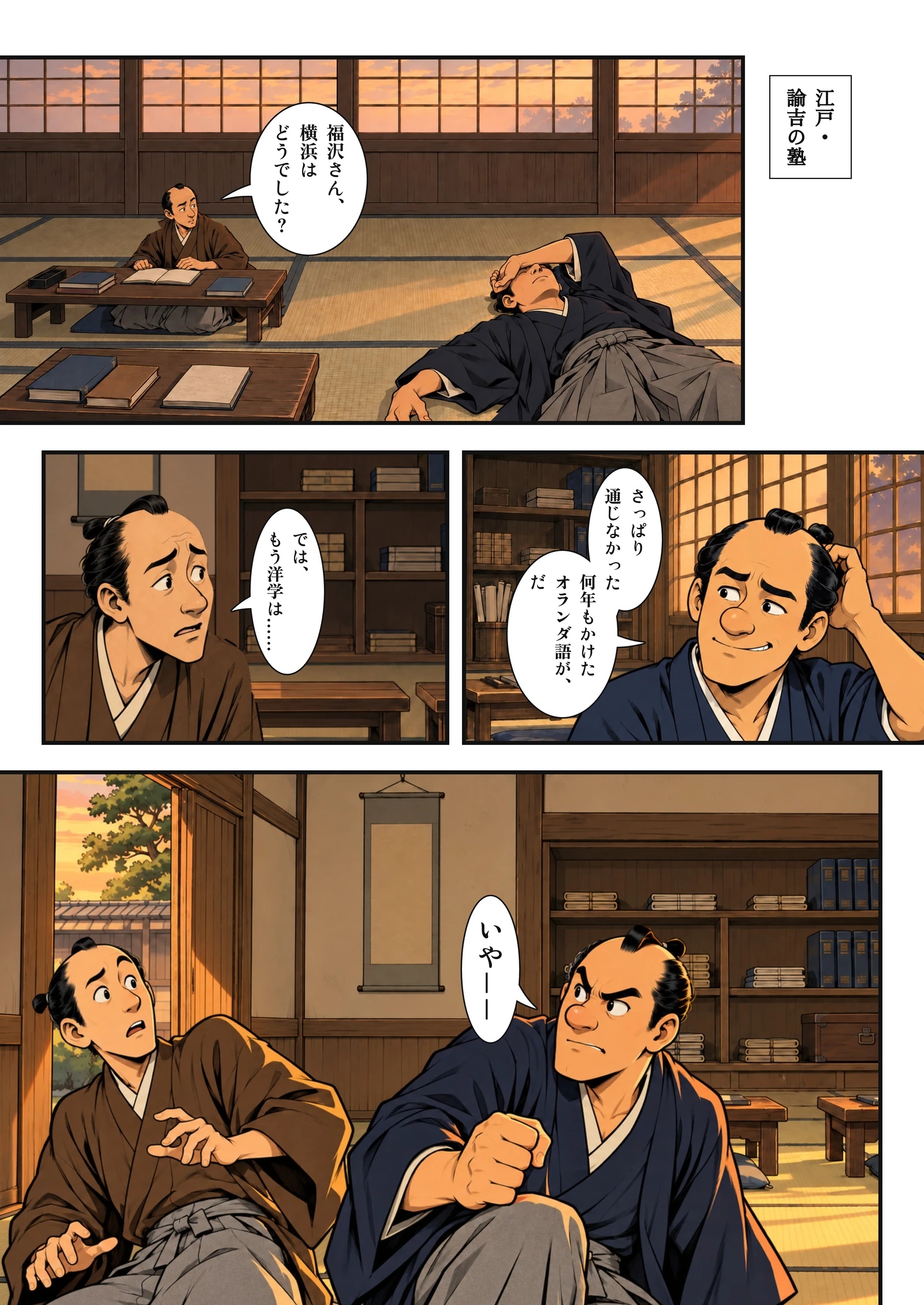
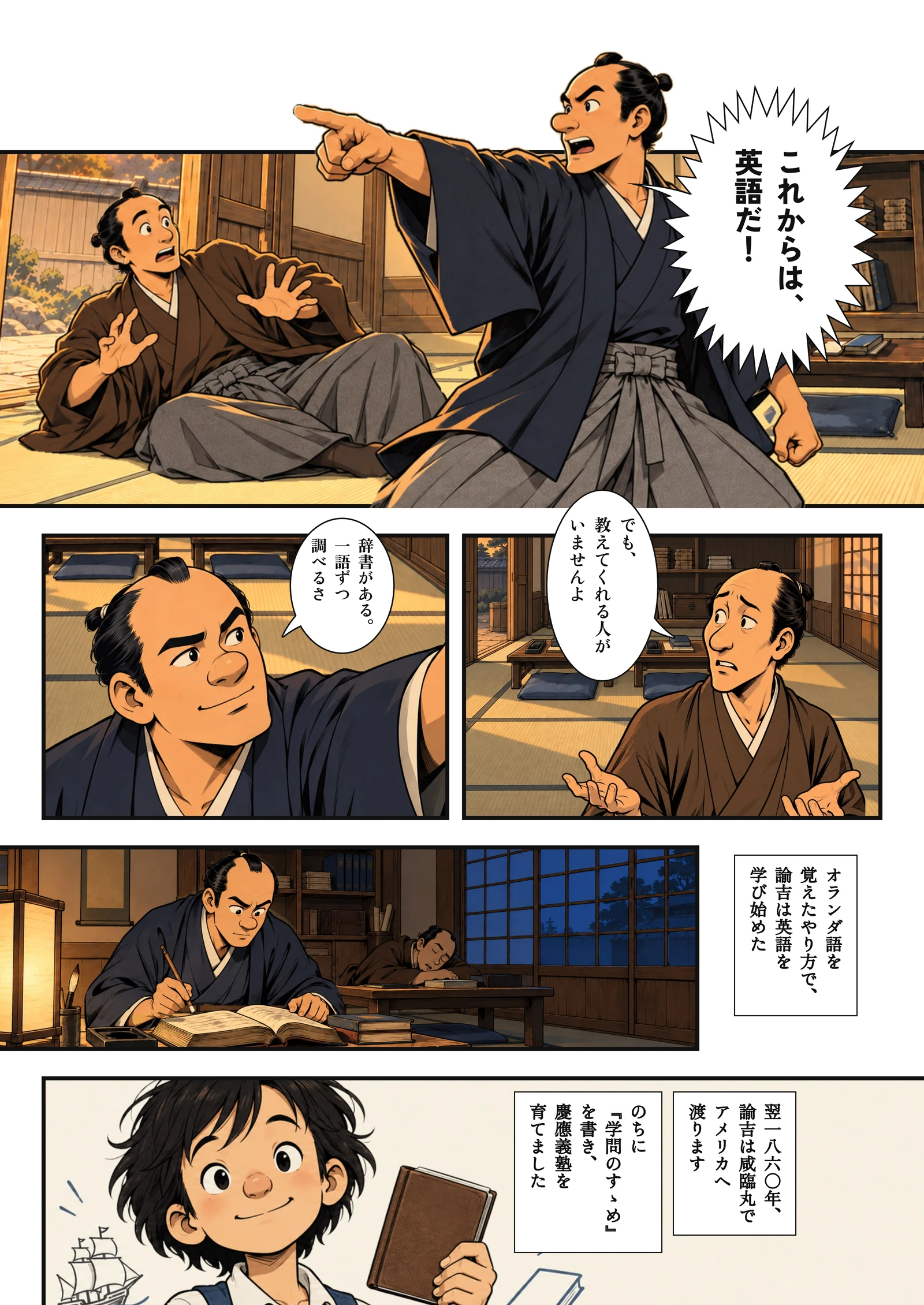
The story draws on Yukichi’s visit to newly opened Yokohama in 1859, where he discovered that Dutch was not useful for communicating locally and decided to study English. Dialogue, expressions and conversations with companions are fictionalized for the comic.
The focus is his next decision: what should he learn now? Rather than throwing away his studies, he carries that experience into a new subject.
Claude developed the script, dialogue, panel layout and page assembly. Codex produced panel artwork and the title image. We assembled the comic in MONOPHASES MANGA; I set the direction and adjusted the final presentation.
My direct finishing edits took about ten minutes. I also initiated production beforehand. Those ten minutes exclude advance script and layout work, AI processing and waiting for images.
The production log records about six minutes to prepare image requests, 77 minutes to generate 18 panel images and the title, 30 minutes for Claude’s review and assembly, and three minutes for checks and corrections. Generation and assembly partly overlapped, so adding these figures does not give total elapsed production time.
For Sugita Genpaku, assembly began after the artwork was complete. This time Claude assembled pages as images arrived. By the end of generation, the first three pages had taken shape.
We also carried observations from the previous finishing pass into the initial composition: spacing, readable text and emphasis. The next draft no longer feels like starting over.
My finishing edits changed accordingly. Previously I focused on text placement and keeping faces visible. This time I focused on closer facial views and stronger emphasis in the key moments.
I adjusted the artwork and lettering to emphasize Yukichi’s surprise and his decision to learn English. Bleed panels and figures extending outside their borders also strengthen those moments.
The same drawing reads differently depending on scale and framing. Bringing a balloon closer to its speaker can also help the reader follow the dialogue. The final ten minutes were spent refining that reading experience.
There were difficulties too. I wanted horizontal lettering for foreign-language dialogue, but could not get the intended adjustment during production and used an alternative presentation. Editability still needs improvement.
We adjusted the title image after deciding to omit episode numbering. A few images also showed small differences between the requested movement and how it read in context. Reviewing artwork alongside neighboring panels matters.
Claude investigated and corrected issues found during production checks. Being able to describe a problem and delegate the work behind the scenes helps me focus on the comic’s presentation.
The main improvement was more than speed. Time previously spent making pages readable could now be spent making their moments stronger. The new draft started with lessons from the earlier comic.
I plan to make more shorts about historical figures, including Ino Tadataka, Oda Nobunaga, Murasaki Shikibu and Emperor Shomu. The next comic may take a different amount of time, but the finishing priorities are becoming clearer.
When a learned language fails you, learning does not end. As Yukichi takes another step in the story, we take another step from one comic to the next.
Read Fukuzawa Yukichi (Japanese) ↗
Historical background: Keio University: Founder Yukichi Fukuzawa ↗
More production notes +