
Making a comic meant building a comic editor
Armoa / MONOPHASESTo turn the Kurose arc of TS Sniper Girl’s Dungeon Streaming into a comic, I built a comic production engine and editing app called MONOPHASES MANGA together with Codex and Claude.
Episode 1 of the Kurose arc, an 18-page comic made with this system, has been published.
Read Kurose Arc Episode 1 on AI MANGA (Japanese) ↗
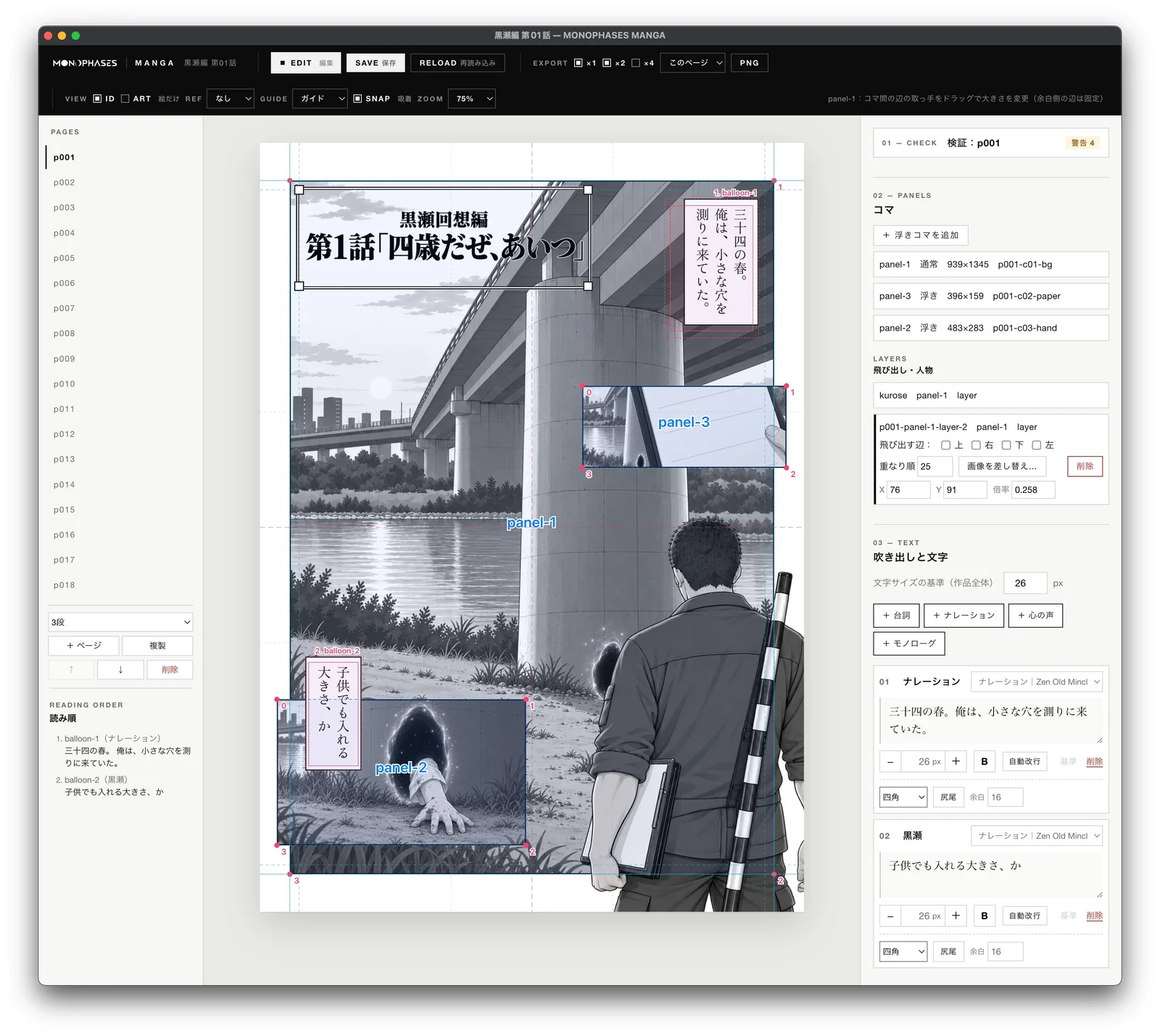
The starting point was to make generated comics easier to revise.
When AI draws an entire page as one image, the artwork, dialogue, speech balloons and panel borders all become part of that image. Even changing a single character requires editing the image. I wanted to keep artwork I liked without redrawing it for changes to text or placement.
So I made artwork, panel borders, balloons and text separate elements. AI draws the panel artwork, while I adjust text and placement in the editor. Separating characters from backgrounds also lets me compose figures that extend beyond the panel border by changing their position and size.
Building the system did not mean the comic could be finished immediately.
I revised balloon shapes and sizes repeatedly: character counts in vertical text, line breaks and padding around the text. Simply fitting the dialogue was not enough to recreate the look of the rough layout. I needed both automatic sizing and manual controls.
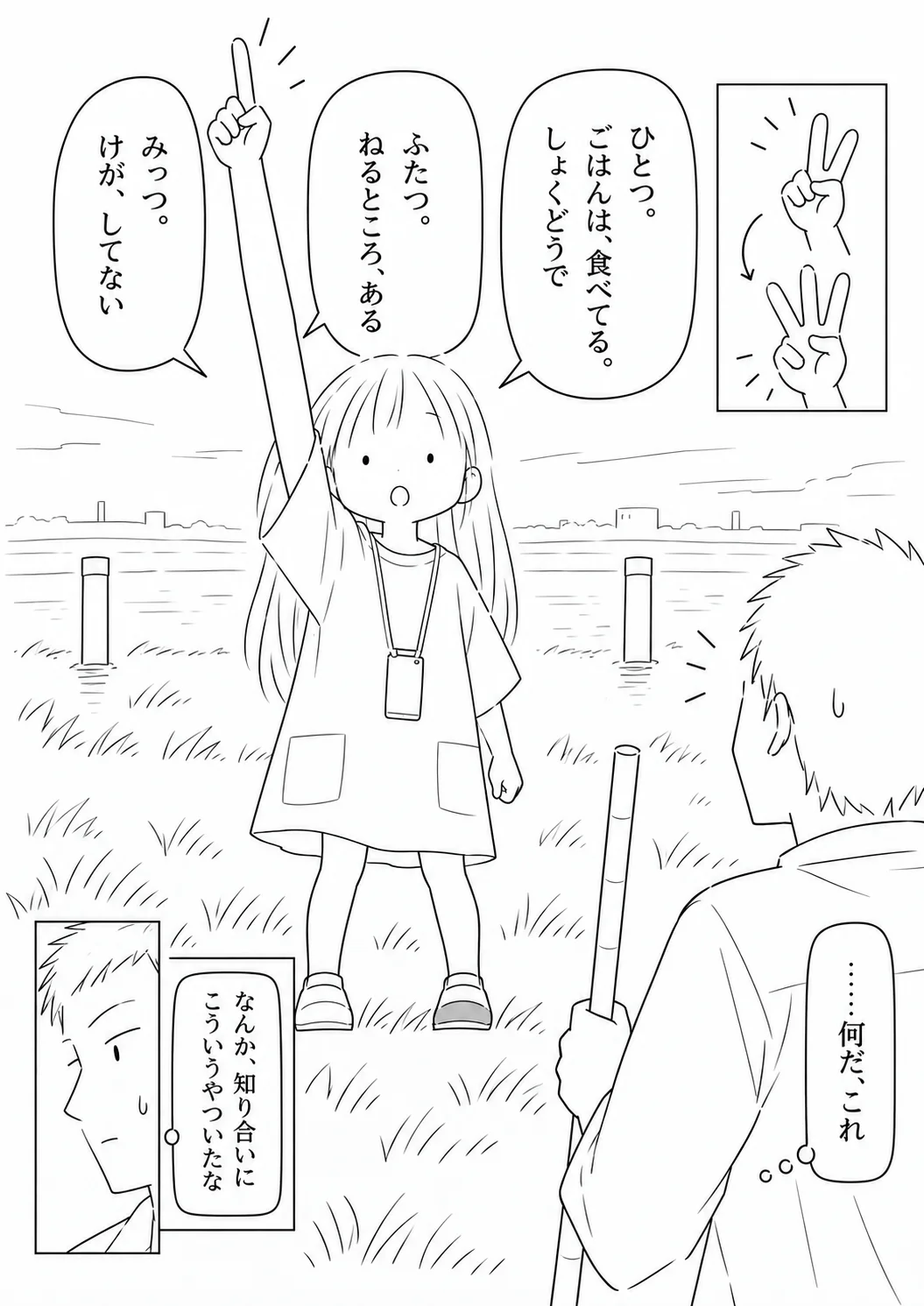
I also tried automatically detecting balloons in the rough layouts, but the detector picked up the drawings too and produced many false positives. I switched to having AI look at the rough layout and record balloon positions as coordinates.
Importing generated artwork brought another issue: filenames did not always follow the convention I had specified. Rather than ask for renaming every time, I made the import tool recognize backgrounds, characters and revisions.
The editing features grew through use. Deleting a split panel should expand its neighbor to fill the gap. I wanted to choose my own line breaks and resize balloons directly. Working on actual pages showed me which controls to add.
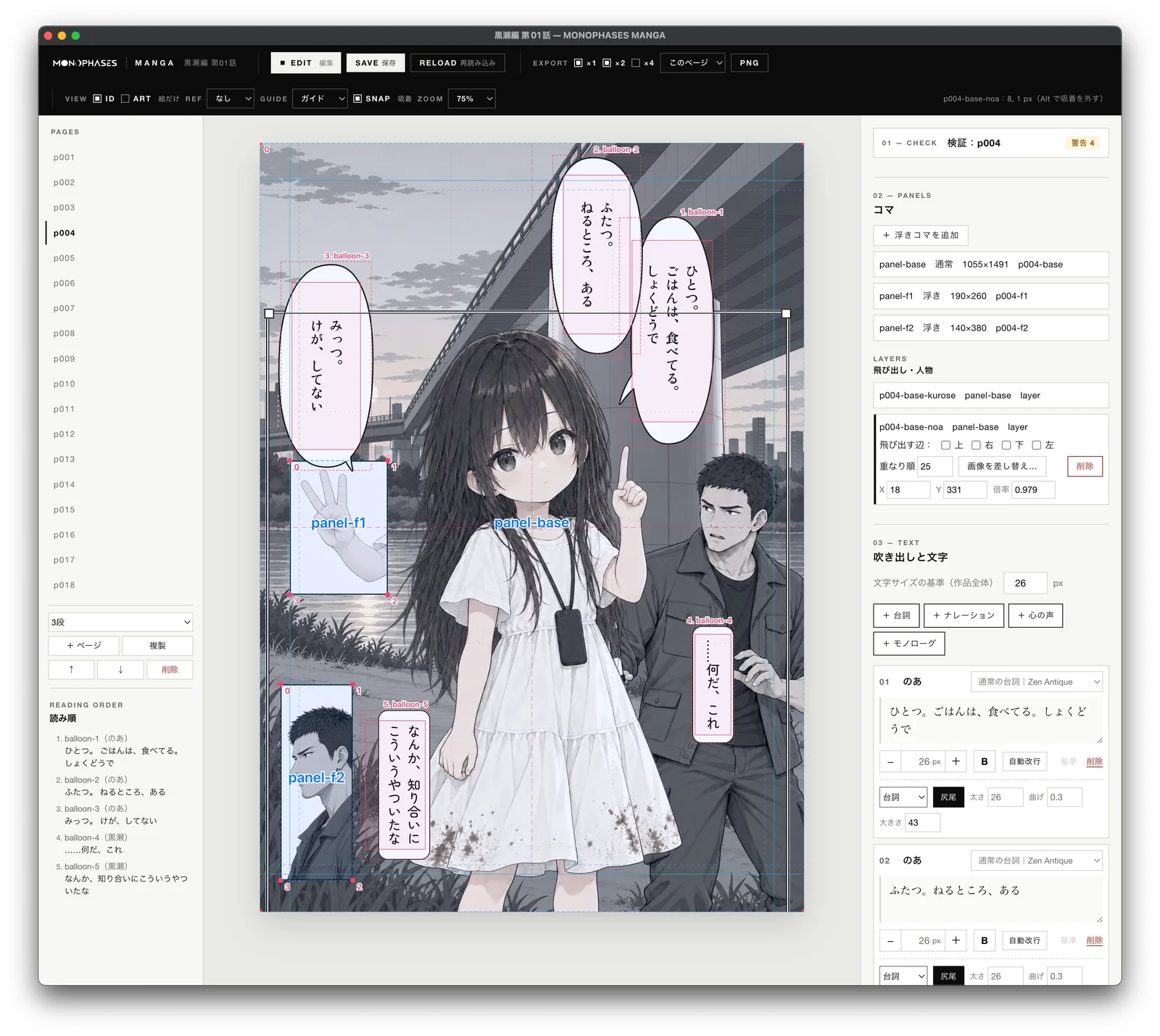
Episode 1 is published, but work on the tools continues.
Panel layouts, balloons and dialogue are managed as JSON. I am considering a workflow in which AI reads the rough layout, creates the JSON for the page, and takes it through initial placement in the editor.
A human would then review that draft and adjust composition, reading order and the pauses in the dialogue. I also plan to build a system for receiving AI changes as proposals and comparing before and after before accepting them.
While making a comic, I ended up making the tools to produce it too.
Humans decide; AI gives those decisions form. I am building the foundations that let us keep refining what happens in between.
One story, another form.