
Making TS Sniper Girl Episode 3
Armoa / MONOPHASES
Episode 3 of TS Sniper Girl’s Dungeon Streaming, “On the Other Side of the Camera,” is now on YouTube. It adapts chapters 7–9 of the novel, following a recording invitation for Akaribi and the message that sends Noa running.
The finished video runs about 13 minutes 55 seconds including the opening and ending, with roughly 9 minutes 33 seconds of story footage. It features the new opening “Reasons for a Detour” and the ending “Shikai Danmaku.”
Beginning with a document
Episode 2 showed Noa visiting the office even without an errand. In Episode 3, her concern for the three women becomes concrete action: reading a document and running without hesitation.
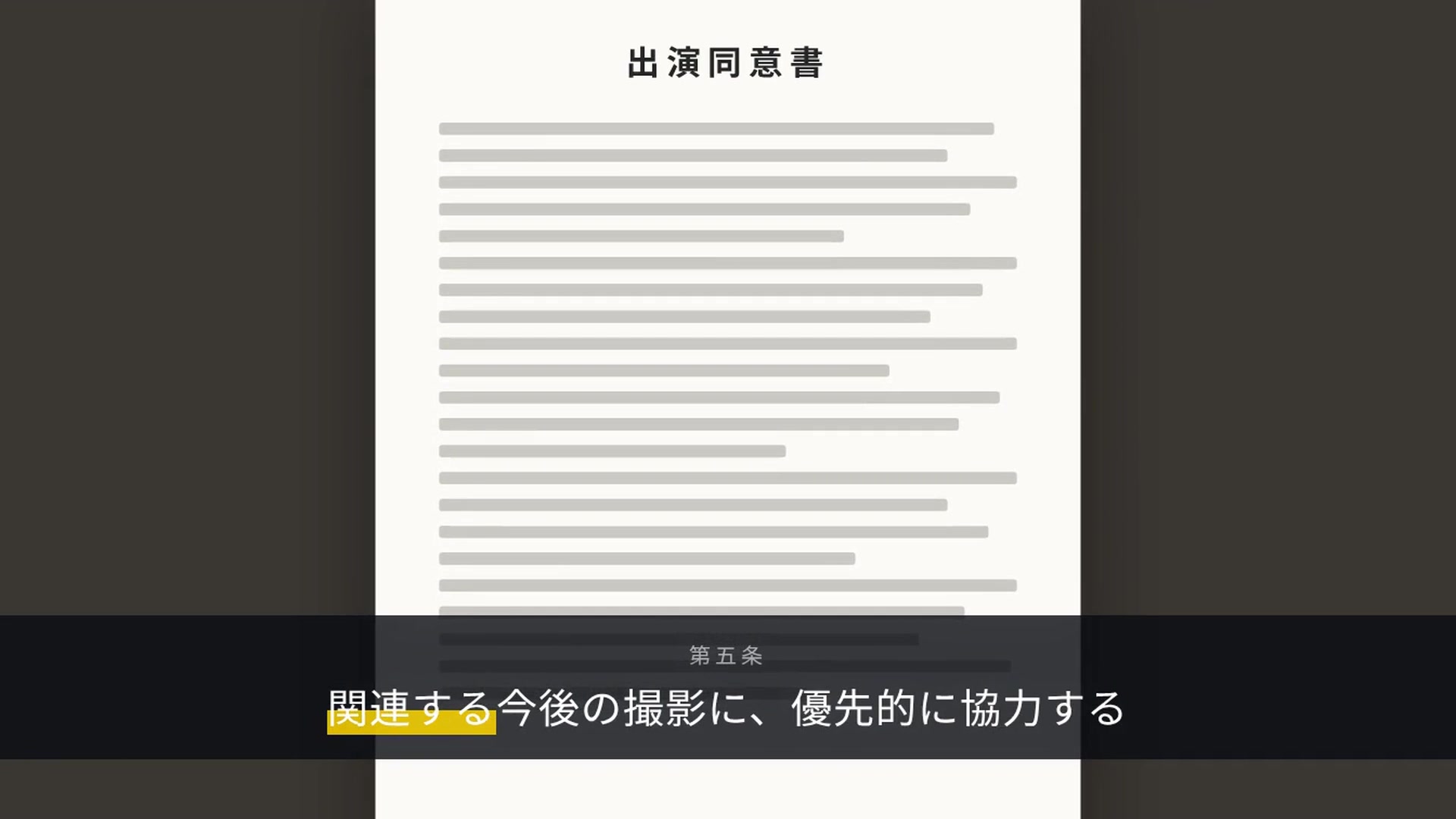
An early centerpiece is Noa reading the fictional appearance consent form. She has declined to appear, but does not want the others to be disadvantaged. Her scrutiny of vague wording, duration and scope shares the scene with her insistence that she learned it all from books.
A full view of the paper alone would not communicate what concerns her. The scene alternates between the document, her reading eyes and the others’ reactions, with important wording enlarged on screen. Reading time is considered alongside dialogue duration.
Aligning final voices and footage
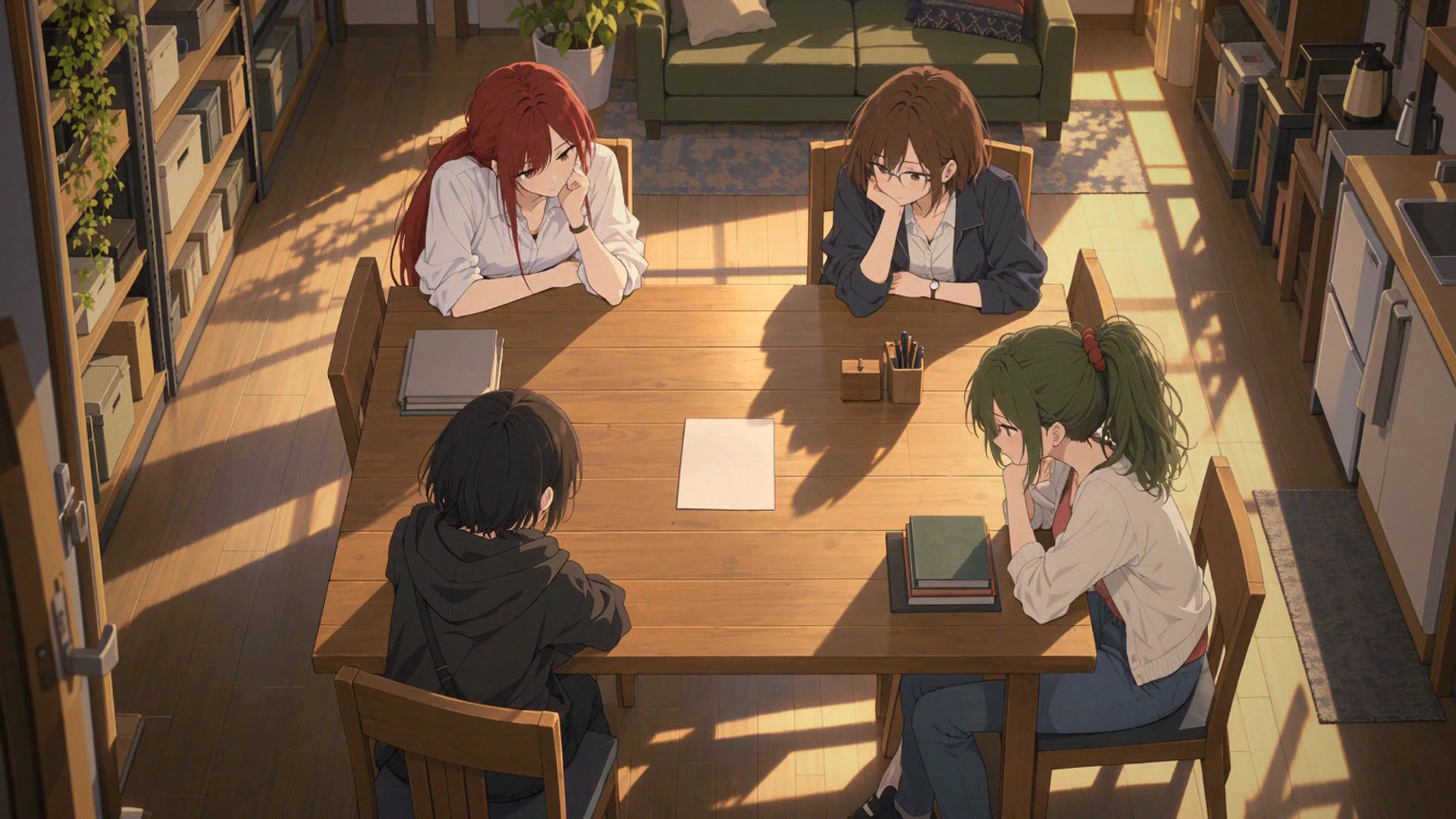
The structure and voice script were developed into a still-image storyboard and then a storyboard video. The production folder includes several review versions, including ones with the final voices. Watching them in sequence helped assess whose face belongs with each line and when to move on.
For dialogue, we used editing to match mouth movements in generated footage with Fish Audio recordings. Transcription timestamps identify when speech begins in the video; footage starts slightly before that point, with the final voice placed at the speaking onset.
Where a previous line ran into the next speaker’s shot, the preceding shot was extended so the next shot could begin with its own line. Minor voice speed adjustments were used only where a small change would fit; footage that remained too short holds its final frame.
Some characters moved their mouths during inner monologue or off-screen speech. For such shots, the workflow also provides still images with a slow push-in or changing light. The source of the voice is treated separately from the action visible on screen.
From a single message to a run
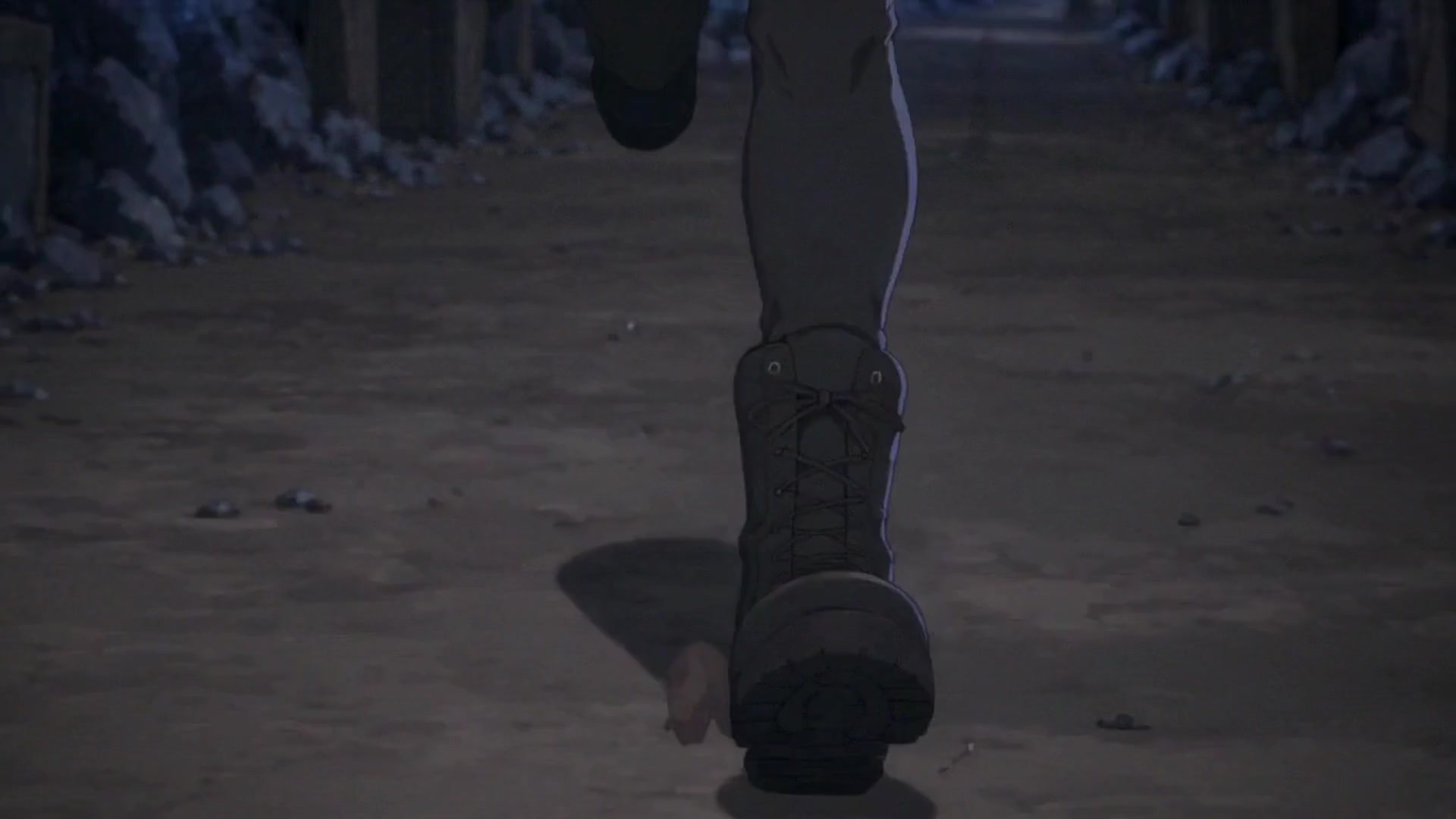
The latter half connects the time of people unable to move with Noa’s urgent run. A small action sending a line on a phone contrasts with the larger movement from the tunnel toward its exit, supporting the change when the message arrives.
The staging shows approaches, grabs and their results while taking decisive impacts off screen through cuts or darkness. The sequence keeps Noa’s purpose—reaching the three women—continuous alongside her physical strength.
The chest camera and its red lamp connect to the episode’s title. Those filming, those being filmed and those watching remotely give familiar livestream equipment a different meaning during the incident.
A new opening connects two episodes
The new opening, “Reasons for a Detour,” reassembles footage from Episodes 1 and 2 around Noa’s work and her growing closeness to Akaribi. The new song runs about 74 seconds. Vocal entries and pauses were measured to align selected footage and transitions.
The introduction was shorter than planned, so fewer opening shots were used. Longer lines were divided between two views and a brief pause received a momentary insert. Shot lengths follow the actual song rather than a uniform pattern.
Older footage was reviewed before reuse. Shots where hair or equipment made a running figure look like someone else were replaced with an evening rear view or a close shot of the chest camera. Character continuity was part of selection alongside musical timing.
Finishing sound, light and subtitles
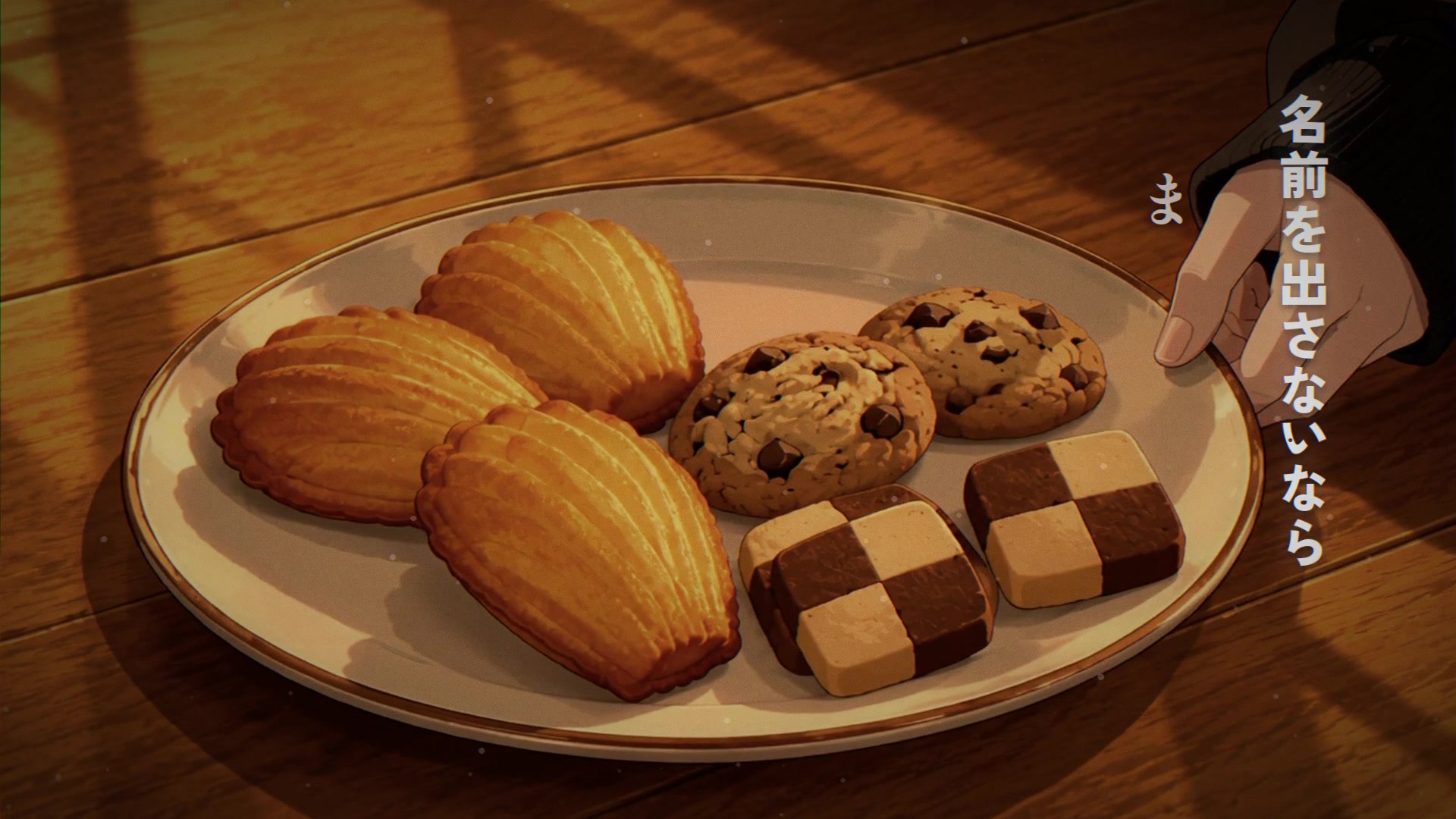
Finishing adjusted the colors of the evening office, white recording room, tunnel and bright exit. Dialogue, effects, ambience and music were handled separately, lowering music under voices. Paper, notifications, footsteps and doors were timed to scene changes.
Japanese SRT subtitles were also prepared for the story dialogue. The opening and ending already have lyrics on screen, so the subtitle file covers dialogue only. The completed version is 1920×1080 at 24 fps; the story footage’s source resolution is 1344×768.
Episode 3 balances time for reading, listening and understanding the results of action. I hope viewers follow what Noa notices, what she leaves unsaid and the words that make her run—from the other side of the camera.
Read the Episode 2 production journal +
More updates +